

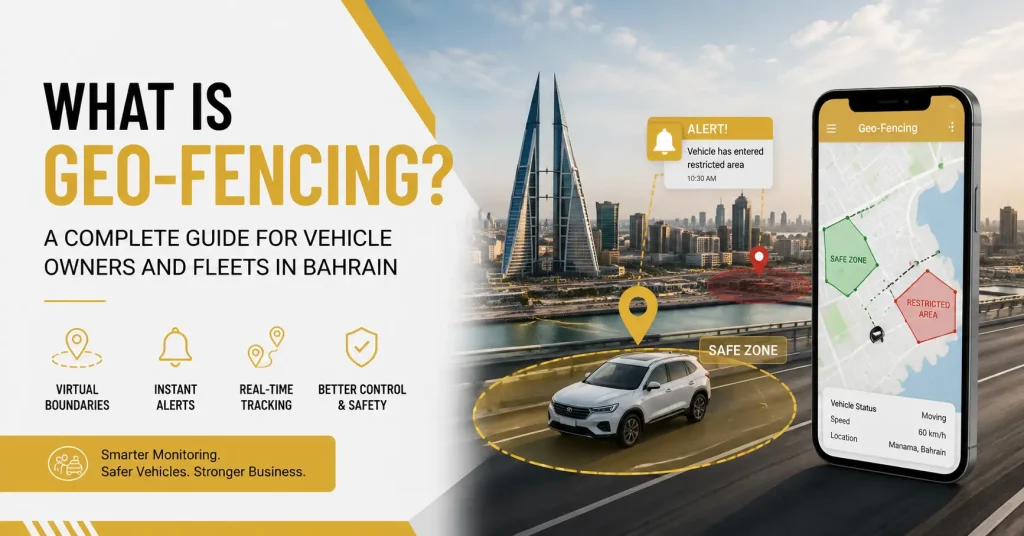
What is Geo-fencing? A Complete Guide for Vehicle Owners and Fleets in Bahrain
Offer
Special Qatar Offer – Get Premium GPS Tracking with Free Installation!
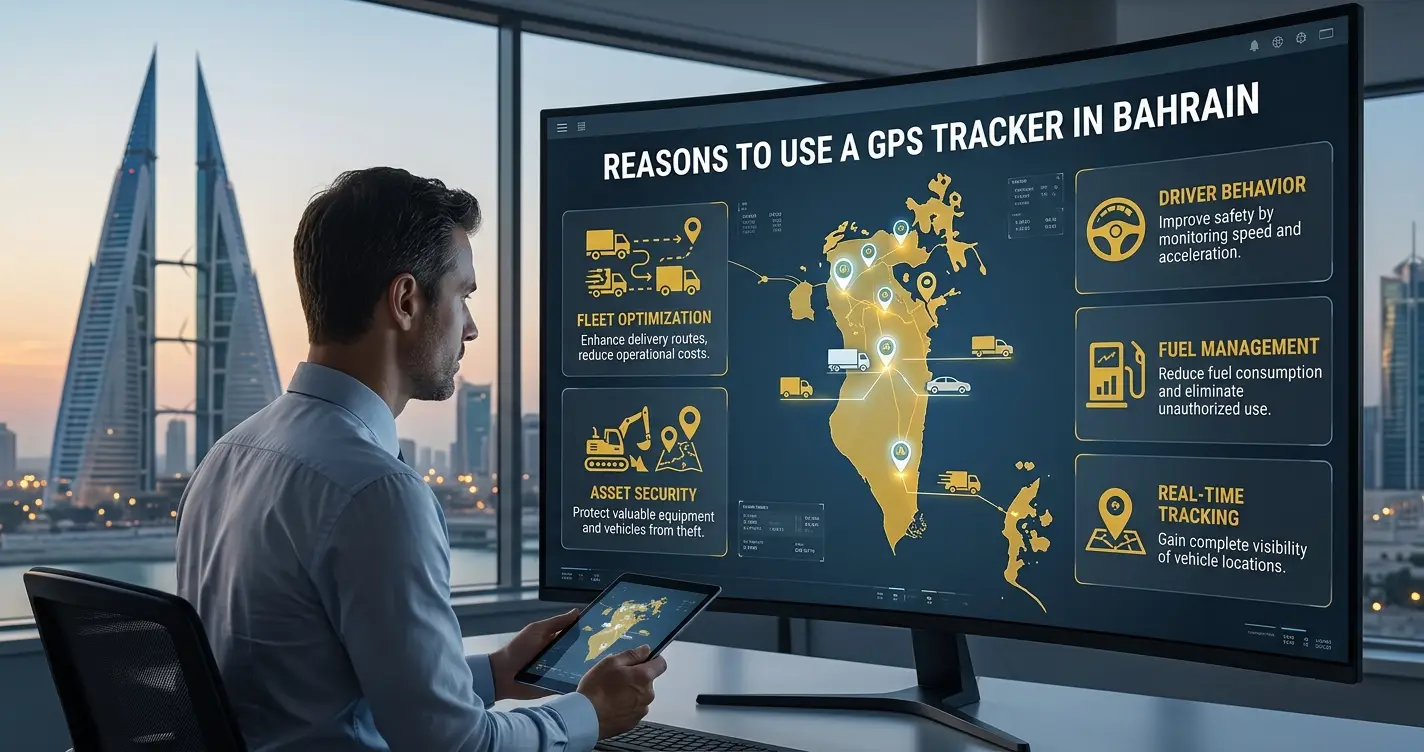
Imagine your delivery van leaves the depot in Sitra at 8 a.m. as scheduled, but late that evening it’s still moving well beyond its assigned service area. Or your teenager borrows the family car for a quick trip and ends up driving somewhere you never expected. In situations like these, wouldn’t it be reassuring to know the exact moment your vehicle leaves or enters a specific area?
If you’ve ever wondered what geo-fencing is, the answer lies in one of the most practical features of modern GPS tracking systems. It’s quickly becoming a must have for vehicle owners and fleet businesses across Bahrain. In this guide, we’ll explain what geo-fencing is, how it works, and why it matters whether you own a single car or manage a fleet of fifty.
What You Need to Know About Geo-fencing
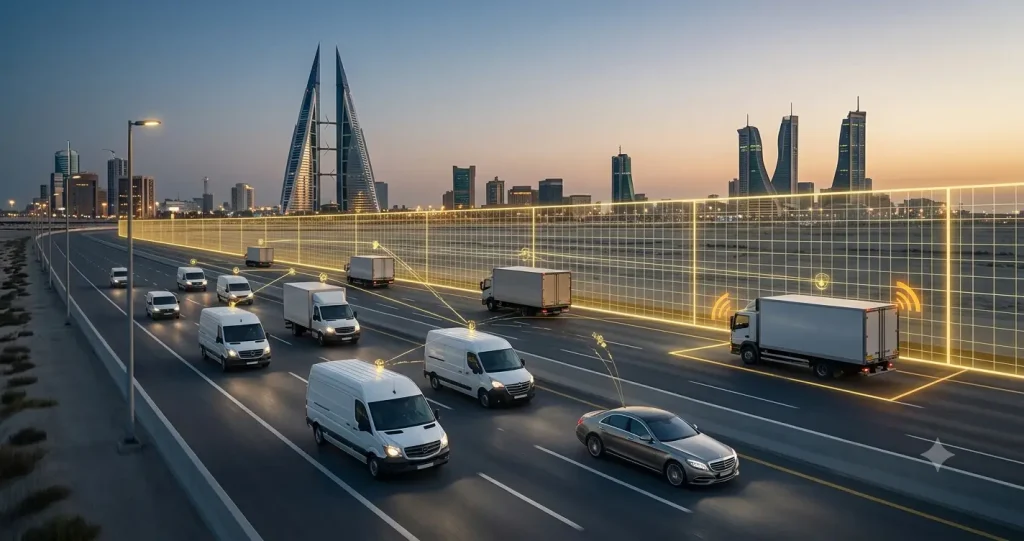
Geo-fencing is a location-based technology that lets you draw a virtual boundary, a fence around a specific geographic area using GPS or map coordinates. Once that boundary is set inside a GPS tracking app or platform, the system automatically monitors whether a vehicle enters or exits that zone.
Rather than manually checking a map every few minutes to see where a vehicle is, geo-fencing works in the background and notifies you the instant something crosses the line. You could set a fence around your home, your business premises, a customer’s delivery address, or even an entire city district; the boundary can be as small or as wide as you need it to be.
In short, geo-fencing turns a passive GPS tracker into an active alert system that works for you around the clock.
How Does Geo-fencing Work?
Setting up a geo-fence is simpler than most people expect. Here’s the basic process behind it:
1. Define the zone
Using the tracking app or web dashboard, you mark out an area on the map, either as a circle around a point or a custom-shaped boundary around a neighborhood, industrial area, or route corridor.
2. Link it to your vehicle
The geo-fence is then attached to one or multiple vehicles in your account, so the system knows which vehicles to monitor against that boundary.
3. Continuous monitoring
The GPS device installed in the vehicle continuously reports its position. The tracking software compares that position against every geo-fence you’ve created.
4. Instant alerts
The moment a vehicle enters or exits a defined zone, the system sends a notification typically via the mobile app, SMS, or WhatsApp so you know immediately, not hours later.
This all happens automatically. Once the zones are set, there’s no manual checking involved; the system does the watching for you.
Types of Geo-fencing Alerts
Geo-fencing isn’t a single, one-size-fits-all feature. Depending on your needs, you can typically configure it in a few different ways:
1. Entry alerts
Notify you when a vehicle enters a restricted or specific zone (useful for restricted sites, competitor locations, or high-risk areas).
2. Exit alerts
Notify you when a vehicle leaves an approved area, such as a delivery zone, city boundary, or home compound.
3. Time-based fencing
Combine a geo-fence with a time condition, such as flagging any movement outside business hours.
4. Route corridor fencing
Create a boundary along an expected travel route so you’re alerted if a vehicle strays significantly off-course.
Key Benefits of Geo-fencing
1. Enhanced Vehicle and Asset Security
For individual vehicle owners, a geo-fence around your home or workplace means you’ll know immediately if your car is moved without your knowledge, a critical early warning in the case of theft or unauthorized use.
2. Better Fleet Oversight for Businesses
For fleet operators in Bahrain, geo-fencing offers a practical way to confirm that drivers are sticking to assigned routes and service areas. If a delivery truck unexpectedly leaves its designated zone, dispatchers are alerted right away and can act before a minor deviation turns into a bigger problem.
3. Improved Driver Accountability
Knowing that a vehicle’s movements are being monitored against defined boundaries naturally encourages drivers to stick to approved routes and schedules, reducing unauthorized detours, personal use of company vehicles, and unnecessary fuel consumption.
5. Faster Response to Unusual Activity
Whether it’s a vehicle leaving a secure yard after hours or entering an unfamiliar area late at night, geo-fencing turns unusual activity into an immediate notification rather than something you discover after the fact.
6. Support for Compliance and Reporting
For businesses handling logistics, deliveries, or transportation contracts, geo-fence data provides a clear, timestamped record of when vehicles entered or left specific zones useful for internal reporting, client updates, and resolving disputes.
Practical Uses of Geo-fencing in Bahrain
1. For individual vehicle owners:
Set a geo-fence around your home, workplace, or a family member’s usual routes. If a car is used outside expected hours or leaves a defined safe area, you’ll be alerted immediately, helpful for both theft prevention and monitoring younger or new drivers in the household.
2. For fleet and logistics businesses:
Bahrain’s compact geography means delivery and service businesses often operate within tightly defined zones specific districts, industrial areas, or customer clusters. Geo-fencing lets operators confirm vehicles are staying within their assigned coverage areas, flag unauthorized stops, and maintain tighter control over daily operations without needing to manually track every vehicle.
3. For construction and equipment-heavy businesses:
Geo-fences around job sites or equipment yards help flag unauthorized movement of vehicles or machinery, adding an extra layer of asset protection.
Why Bahrain Businesses and Vehicle Owners Trust Najoom Al Thuraya
At Najoom Al Thuraya Bahrain, geo-fencing is built into our GPS tracking platform as a standard feature, not an expensive add-on. Our devices are installed by trained technicians, backed by a responsive local support team, and paired with a mobile app that makes setting up zones and receiving alerts genuinely simple. With a track record of serving businesses and individuals across the region and a dedicated local office in Sanabis, we understand the specific routes, districts, and operational patterns that matter to Bahrain-based drivers and fleets.
FAQ's
No. Most modern GPS tracking apps, including Najoom Al Thuraya’s platform, let you draw a geo-fence directly on the map in just a few taps with no technical background required.
Yes. You can typically create multiple zones for a single vehicle for example, a fence around your home and a separate one around your workplace and receive alerts for each independently.
With a properly functioning GPS device and network connection, entry and exit alerts are sent within moments of the vehicle crossing the boundary, allowing for a genuinely quick response.
Not at all. While fleet operators get significant operational value from it, individual vehicle owners also benefit particularly for theft prevention and keeping track of family vehicles.
Conclusion
Geo-fencing takes the guesswork out of vehicle monitoring. Instead of wondering where a car or delivery van might be, you get a clear, automatic signal the moment it enters or leaves the areas that matter to you. Whether you’re protecting a personal vehicle or managing a growing fleet across Bahrain, geo-fencing offers a simple way to stay informed and in control without watching a map all day.