

Features of GPS Tracking for Smarter Vehicle Monitoring
Offer
Special Bahrain Offer – Get Premium GPS Tracking with Free Installation!
Running a fleet in Bahrain comes with its own daily challenges. A vehicle may take longer than expected to reach a job, fuel costs can go up month after month, and it is not always easy to know how drivers are behaving on the road. These are common issues, and if they are not managed, they can slowly cost a business time, money, and reputation.
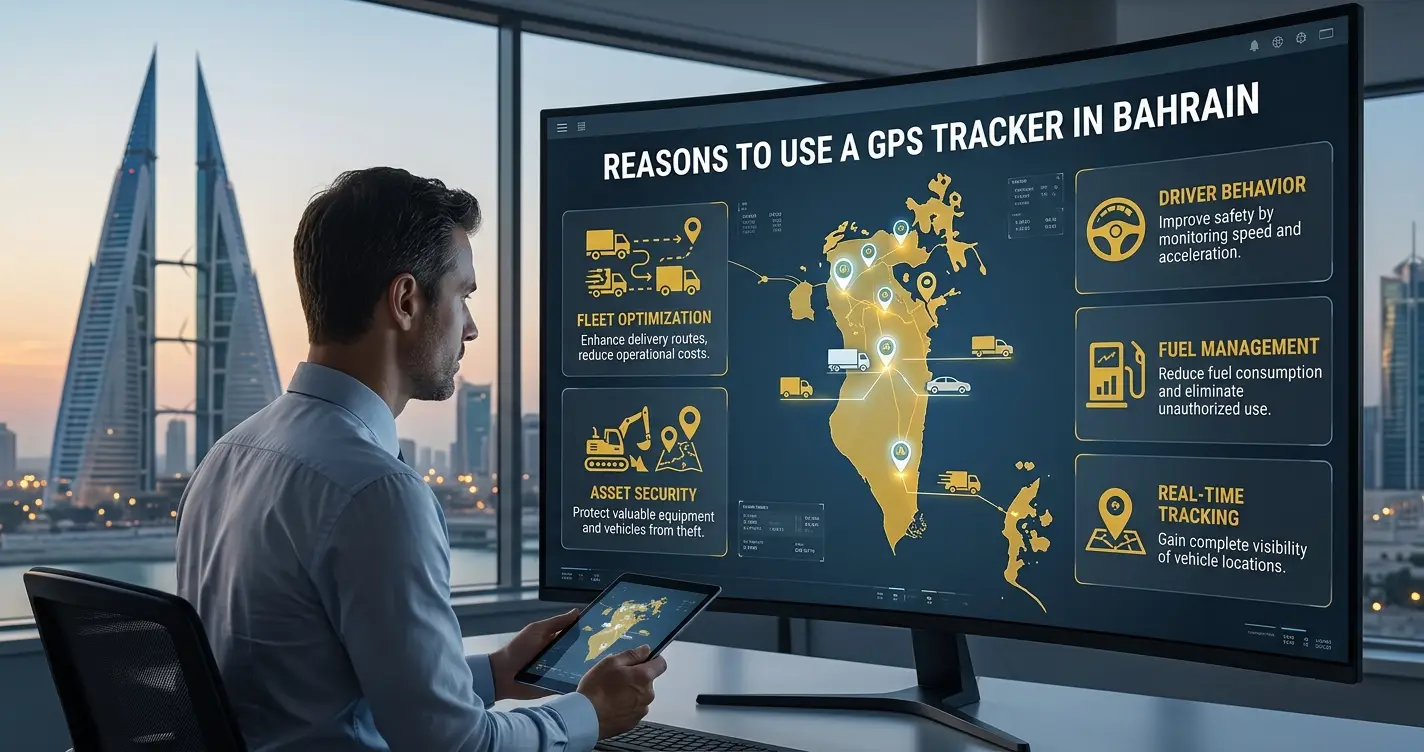
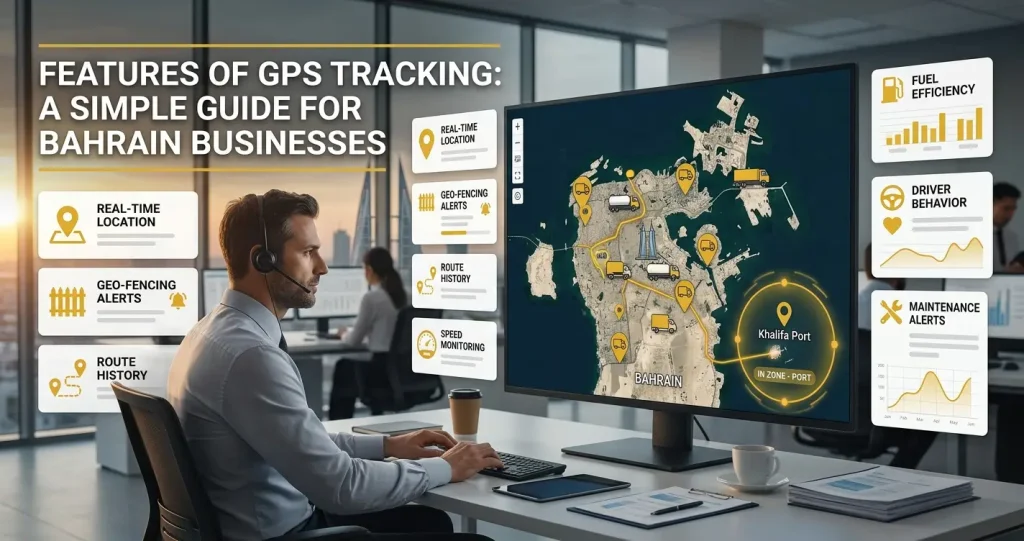
This is where the features of GPS tracking can help. Modern GPS tracking systems give business owners better control over fuel costs, driver behavior, vehicle safety, and how well a fleet runs every day. In a place like Bahrain, where traffic, hot summers, and tight delivery schedules are part of daily business, this kind of control can make a real difference. It can help a fleet run more smoothly and reduce everyday problems.
This guide explains what GPS tracking systems can do, how each feature helps in simple terms, and why more businesses across Bahrain are choosing to use them.
Why GPS Tracking Matters in Bahrain
Running a fleet in Bahrain has its own set of pressures. There’s rush-hour traffic around Manama and Muharraq to deal with, heat that puts real strain on engines and tires, and the usual pressure to get jobs done on schedule. Throw in fuel prices, maintenance costs, and the need to know your drivers are actually doing what they’re supposed to, and it starts to make sense why more companies are picking up tracking technology.
What a good GPS system really offers is a clearer picture of what’s happening with your vehicles, instead of just relying on driver reports or hoping for the best. After a few months, this can help reduce costs and avoid many unexpected problems.
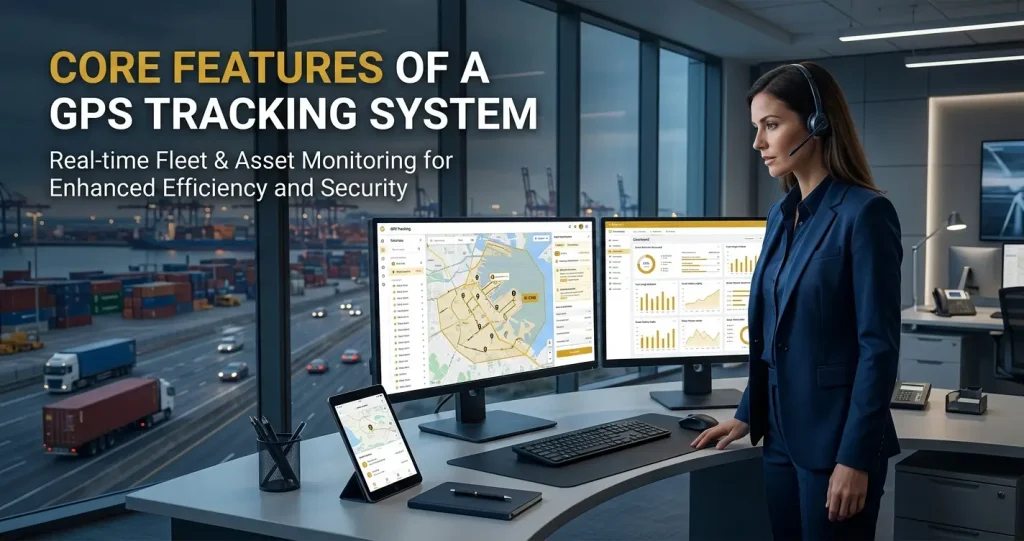
9 Core Features of a GPS Tracking System
1. Real-Time Location Tracking
Real-time tracking is the most basic thing a GPS system does. It shows you where a vehicle is, right now, at any moment. Simple as that sounds, it’s one of the most useful features you’ll use every day. If a new job comes in, dispatchers can send whichever vehicle is closest instead of guessing. Customers get accurate arrival times instead of vague estimates. And a manager can just check the screen to see if a route is being followed, instead of calling the driver to ask.
Knowing where your vehicles are, wherever they are in Bahrain, makes the day easier to manage.
2. Geofencing
Geofencing is just a boundary line you draw on a map around a warehouse, a client’s site, or even a bigger area like the Bahrain International Investment Park. The moment a vehicle crosses that line, in or out, you get an alert. It confirms a delivery actually happened, catches a vehicle being used somewhere it shouldn’t after hours, and helps keep drivers on their assigned routes, all without anyone having to sit and watch the tracking screen all day.
3. Route History and Playback
Live tracking is only half the picture. Most systems also store a full history of everywhere a vehicle has been, so you can pull up a specific day later and see exactly where it went, how long it sat idle at each stop, and whether the driver took a different path than the one they were supposed to.
This turns out to be genuinely useful when there’s a dispute to settle, a service call that needs confirming, or something that just doesn’t add up. It’s the difference between a system that only tells you what’s happening now and one that gives you a real record to check.
4. Fuel Monitoring
Fuel is usually one of the biggest costs for any fleet, so it’s worth keeping a close eye on. Fuel monitoring, usually done through a sensor or the vehicle’s own data connection, can pick up on things like fuel use that doesn’t match the route, a sudden drop that might mean someone’s siphoning it, or a vehicle idling far longer than it needs to.
On their own, these are minor issues. Across a whole fleet, though, they add up fast, and catching even a few of them can mean real savings by the end of the year.
5. Driver Behavior Monitoring
Hard braking, aggressive acceleration, sharp turns, and speeding all wear a vehicle down faster and raise the odds of an accident. GPS systems can detect this kind of driving and log it, which gives a manager something concrete to work with when it’s time to talk to a driver about their habits.
The point isn’t to catch people out. It’s to keep drivers safer, cut down on the costs that come with accidents, and get more usable life out of each vehicle. Better driving habits tend to help with insurance and claims history too, which matters more as a fleet grows.
6. Maintenance Alerts
A lot of platforms now track mileage or engine hours and let you know automatically when something’s due, whether that’s an oil change, new tires, or a general inspection.
Staying ahead of maintenance like this is one of the simpler ways to avoid a breakdown at the worst possible time, like the middle of a busy delivery week or right before a deadline that can’t slip.
7. Anti-Theft and Recovery Support
Many GPS systems come with features built for exactly this situation: alerts if a vehicle moves without authorization, precise tracking to help with recovery, and in some setups, the option to remotely disable the engine once the vehicle has stopped.
That last capability depends on the provider and the vehicle itself, and it should only ever be used once a vehicle is safely stationary, never while it’s still moving. Even without that specific feature, fast and accurate location data on its own can make a real difference in getting a stolen vehicle back.
8. Reporting & Analytics
A dashboard takes all that tracking data and turns it into something you can actually use. It shows you the basics in plain terms: how far vehicles traveled, how much fuel they used, how long they sat idle, and how each driver was doing.
These reports make it easy to act on what you see. Maybe that means changing a route, letting go of a vehicle that costs more than it’s worth, or giving credit to a driver who’s doing a great job.
9. Mobile & Web Access
Fleet management doesn’t stop the moment someone leaves the office, so most systems now come with a vehicle tracking mobile app alongside the usual web dashboard. That means checking vehicle status, responding to alerts, or reviewing reports can happen from wherever someone is, whether that’s out on-site or just away from a desk.
How These Features Help Bahrain Businesses
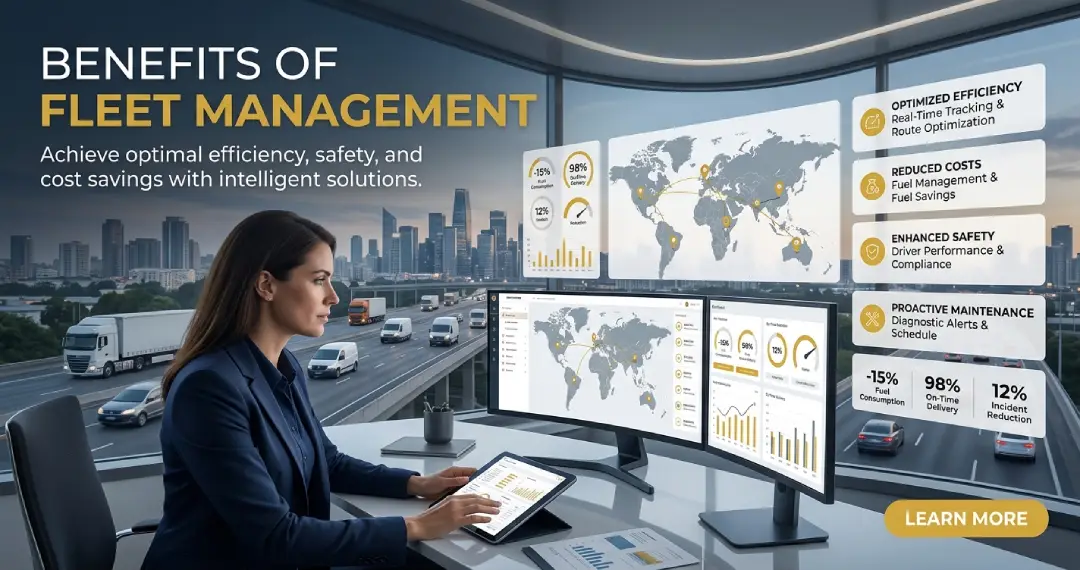
Put together, these features do a lot more than simply show you where a vehicle is. Businesses that use GPS tracking effectively tend to see real improvements in a few key areas:
- Lower running costs:
Smarter fuel use, fewer wasted trips, and less money lost to idling or inefficient routes - Better customer experience:
Delivery windows that are actually reliable, so customers aren’t left guessing when to expect a driver - Stronger security:
Protection against theft and unauthorized use, with a faster response when something goes wrong. - Easier compliance:
Usage data gets recorded automatically, so there’s a clear record to fall back on instead of relying on memory - Longer-lasting vehicles:
Helped along by regular maintenance reminders and steadier, less aggressive driving over time - More accountability:
Better visibility across drivers and staff, without the need to micromanage anyone or check in constantly.
For industries like logistics, construction, retail delivery, and field services which together make up a large chunk of Bahrain’s economy these gains tend to show up directly in day-to-day operating costs.
FAQ's
It helps businesses keep tabs on vehicle location, driver behavior, fuel use, and maintenance needs. In practice, that translates into better efficiency, lower costs, and stronger protection against theft or misuse.
It sends an automatic alert whenever a vehicle enters or leaves a set area, which is useful for confirming deliveries, checking that routes are being followed, and catching any unusual or unauthorized movement.
Most systems allow for immediate location tracking to assist with recovery, and some also offer remote engine immobilization once the vehicle has come to a stop. Exactly what’s available depends on the system, but even basic location tracking alone can speed up recovery quite a bit.
It’s useful at almost any scale. Even a business with just two or three vehicles can see real benefits: better accountability, fuel savings, and added security. It’s not just something for big fleets, it’s a practical option for almost anyone.
Yes. Real-time GPS tracking allows businesses to see where their vehicles are. Features such as geofencing and alerts can also notify you when a vehicle leaves a designated area or shows unusual movement.
Final Thoughts
GPS tracking has become a genuinely practical tool for businesses in Bahrain that want more control over their vehicles, their drivers, and how their day-to-day operations actually run. From real-time tracking to fuel monitoring and theft recovery support, each feature plays its own role in helping a company operate more smoothly and securely, all while staying mindful of employee privacy and data protection along the way.
If GPS tracking is something you’re considering for your fleet, it’s worth spending a bit of time figuring out which features actually matter for how you operate, rather than just picking the most feature-heavy option available. Najoom Al Thuraya offers GPS tracking solutions built specifically for Bahrain’s businesses, with local support to help get everything set up correctly and deliver real value from day one.
Get in touch with Najoom Al Thuraya today to find the right GPS tracking solution for your fleet.