

What is Fleet Management System? A Complete Guide for Bahrain Businesses
Offer
Special Bahrain Offer – Get Premium GPS Tracking with Free Installation!
If your business uses vehicles, you know how hard it can be to keep track of everything. A delivery vehicle may be across Manama, a service van may be at a construction site, while another truck could be moving goods through Muharraq. Managing one or two vehicles is simple. Managing five, ten, or more can quickly become difficult.
So, what is fleet management system? It helps you see and manage all your business vehicles in one place. You can check where a vehicle is, see its route, monitor how it is being driven, and know when something needs your attention. Without a tracking system, you may have to call drivers to ask where they are. By the time they answer, their location may have already changed. You may still not know whether they took the right route, stopped somewhere for too long, or are running late.
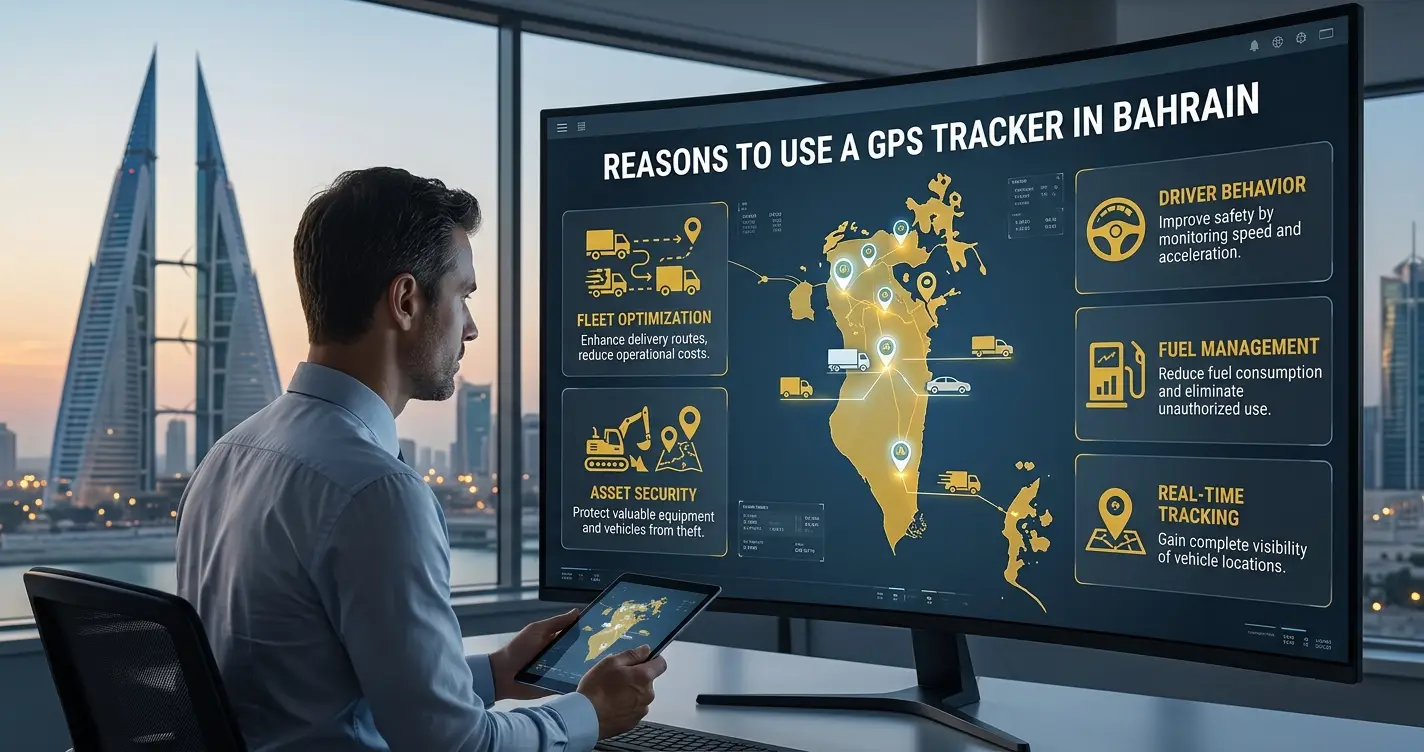
A fleet management system makes this easier. A small GPS device is installed in each vehicle and sends location and activity information to a software platform. You can then check your vehicles from your phone or computer without calling each driver.
At Najoom Al Thuraya, we provide GPS tracking and fleet management solutions for businesses across Bahrain. In this guide, we’ll explain what a fleet management system is, how it works, what benefits it offers, and what to look for when choosing one for your business.
What Does a Fleet Management System Do?
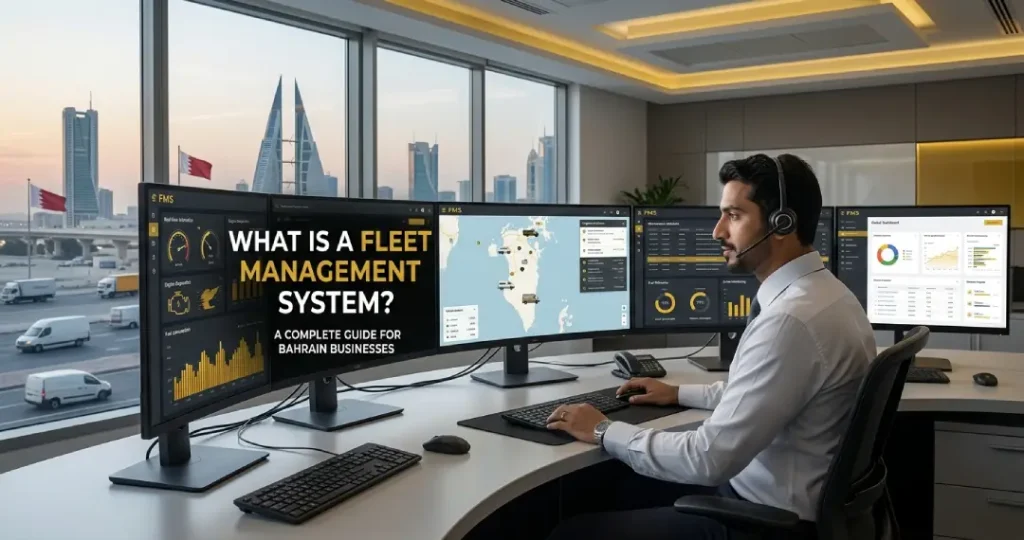
A fleet management system connects GPS trackers in your vehicles with software that lets you monitor them from one place. Depending on the system, you can see:
- Live vehicle locations
- Trip and route history
- driver behaviour monitoring
- Idle time
- Geofencing alerts
- Fleet reports
Instead of calling drivers one by one, you can check everything from a single dashboard.
Fleet tracking mainly focuses on vehicle location and movement, while fleet management can also include driver monitoring, maintenance, reporting, and daily fleet planning.
Why Does This Matter for Businesses in Bahrain?
A lot of businesses here rely on vehicles every single day: deliveries, technicians heading out to job sites, construction crews moving between locations, transport companies, and so on. Once you’re juggling more than a couple of vehicles, doing this manually starts eating up time you don’t really have.
Take a delivery business, for example. On a busy day, there could be several vehicles out at once, all headed in different directions. Or think about a maintenance company sending technicians to different customer sites, or a construction firm with vehicles moving between multiple work sites. Trying to keep tabs on all of that without proper tools is a lot of unnecessary hassle.
A fleet management system gives you visibility you just don’t get otherwise. You can check locations, look back at routes, get notified when something needs attention, and pull reports that actually tell you something useful. Over time, this kind of information helps you spot things like wasted trips, inefficient routes, or driving habits that need a word.

The Main Parts of a Fleet Management System
1. GPS Fleet Tracking
This is the backbone of the whole thing. A small GPS device in the vehicle sends location and movement data back to your platform. From there, you can see where a vehicle is, follow its route, and tell whether it’s moving or parked.
For businesses spread across Bahrain, this alone makes a big difference: you get one screen to check instead of several phone calls.
2. Fleet Management Software
The software is what turns all that tracking data into something you can actually use. A good platform lays it out clearly: locations, alerts, reports, past trips, so you’re not digging through raw numbers trying to make sense of it.
3. Driver Behaviour Monitoring
Some systems also keep an eye on how vehicles are being driven, things like speeding, harsh braking, sudden acceleration, or too much idling. This isn’t about spying on drivers; it’s about spotting patterns early so you can have a quick conversation before it becomes a bigger issue (or an accident).
Fuel is usually one of the bigger costs for any business running vehicles. Depending on your system, you may be able to track fuel use and spot anything odd, like excessive idling or patterns that don’t quite add up. Catching this early can save real money over time.
5. Maintenance Scheduling
Nobody wants a vehicle breaking down mid-delivery. Many systems track mileage and service intervals and send reminders when maintenance is due, so you’re not relying on someone remembering to check the logbook. Staying ahead of maintenance means fewer surprises and less downtime.
6. Reporting & Analytics
At the end of the day, all this tracking is only useful if it helps you make better calls. Reports on trips, mileage, driving habits, and vehicle use give you a clearer picture of how your fleet is actually performing, not just how you assume it’s performing.
How Vehicle Tracking Helps Your Business
1. You Get Real Visibility
Instead of calling around to figure out where everyone is, you just check the dashboard. Simple as that.
2. You Understand Your Drivers Better
Speeding, harsh braking, too much idle time, once you can see it, you can address it, and that usually means safer driving over time.
3. Your Routes Get More Efficient
Looking back at trip history often reveals wasted journeys or stops that didn’t need to happen. Fixing that saves time and fuel.
4. Your Vehicles are More Secure
If a vehicle strays outside where it should be, geofencing alerts let you know. And if something does go wrong, like unauthorized use or theft, real-time location tracking makes it much easier to respond quickly.
5. Maintenance Stops Sneaking up on You
Tracking mileage and service dates means fewer unexpected breakdowns and less downtime waiting on repairs.
6. You Make Decisions Based on Facts, Not Guesses
Instead of assuming how your fleet is running, you can actually look at the numbers and know.
Who Actually Needs This in Bahrain?
You don’t need to be running a huge logistics operation to benefit from fleet management. It’s useful for all kinds of businesses, including:
- Logistics and delivery companies
- Construction businesses
- Transportation companies
- Maintenance and field-service teams
- Retail businesses with their own delivery vehicles
- Rental vehicle companies
- Companies with a corporate vehicle fleet
If you’re running a smaller fleet, even basic GPS tracking can make a noticeable difference. Bigger operations tend to get more out of the extra features: driver monitoring, detailed reporting, and so on.
Who Actually Needs This in Bahrain?
Every business is a bit different, so before settling on a system, it’s worth thinking about how many vehicles you have, what type they are, and what you actually need out of it.
1. Local support Matters
A provider that knows Bahrain roads, the regulations, and the way businesses here operate makes installation and any troubleshooting down the line a lot smoother.
2. Keep it Simple
If the software is confusing, nobody will actually use it properly. A clean, easy dashboard where you can quickly find locations, alerts, and reports is worth far more than one packed with features you’ll never touch.
3. Think Ahead
If your fleet is likely to grow, make sure the system can grow with it without needing to switch providers later.
4. Real-time Alerts Help
Whether it’s speeding, a vehicle leaving a set zone, or unusual movement, getting notified as it happens is far more useful than finding out the next day.
5. Good Hardware is Non-negotiable
The GPS devices themselves need to be reliable and suited to the vehicles and conditions they’ll actually be used in.
Bringing It All Together
Managing a fleet isn’t just about knowing where your vehicles are at any given moment. It’s also about driver behaviour, routes, maintenance, security, and how vehicles are used day to day. A fleet management system pulls all of that into one place, giving you a much clearer picture of your operations and making it easier to run things smoothly.
For businesses in Bahrain, that clarity really counts, especially when your vehicles are directly tied to getting products delivered, services carried out, or people and materials moved from one place to another.
FAQ's
A fleet management system is a combination of GPS tracking hardware and software that helps businesses monitor and manage their vehicles. It can provide live locations, route history, driver behaviour data, alerts, reports, and other fleet information from one platform.
A GPS tracking device installed in a vehicle collects location and movement data and sends it to fleet management software. Fleet managers can then view this information through a dashboard on a computer or mobile device.
Fleet management systems can be useful for logistics and delivery companies, construction businesses, transportation companies, field-service teams, rental vehicle companies, and businesses with company vehicles.
Yes. By monitoring routes, idle time, mileage, and driving behaviour, businesses can identify unnecessary fuel consumption. This can help them reduce wasted fuel and improve overall fleet efficiency.
Yes. Real-time GPS tracking allows businesses to see where their vehicles are. Features such as geofencing and alerts can also notify you when a vehicle leaves a designated area or shows unusual movement.
If the fleet management provider offers a mobile app or mobile-friendly platform, you can monitor vehicle locations, alerts, and other fleet information from your smartphone.
There is no specific number. Even businesses with a small number of vehicles can benefit from GPS tracking, while larger fleets can use additional features such as driver monitoring, reporting, maintenance tracking, and geofencing.
Final Thoughts
A fleet management system gives you real visibility and control over your vehicles. With GPS tracking, route history, driver monitoring, geofencing, alerts, maintenance tracking, and reporting all working together, you get a much better understanding of how your fleet actually runs and where there’s room to improve.
Najoom Al Thuraya provides GPS tracking and fleet management solutions for businesses across Bahrain. If you’d like better visibility over your vehicles and a more organised way to manage your fleet, get in touch with us to find a solution that fits your business.