

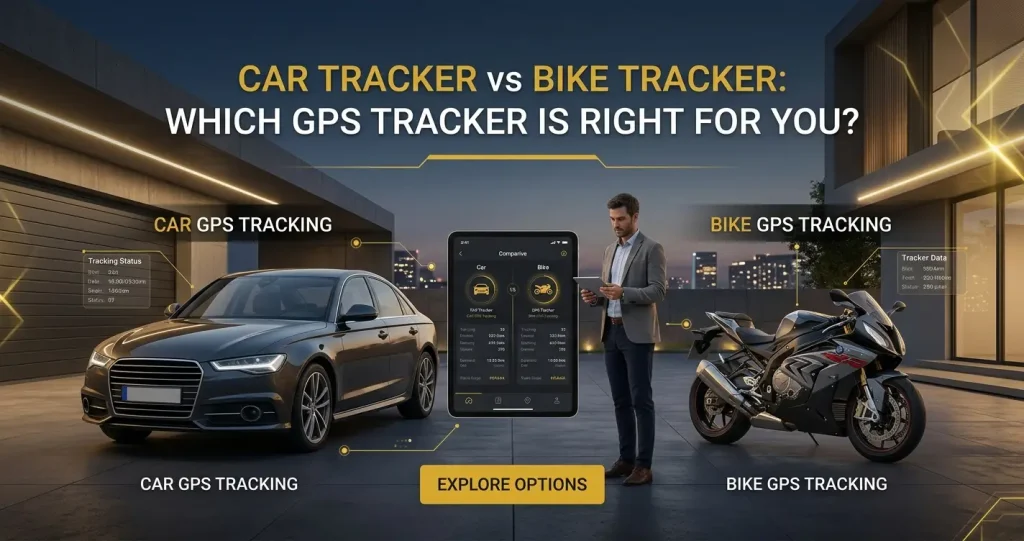
Car Tracker vs Bike Tracker: Which GPS Tracker is Right for You?
Offer
Special Bahrain Offer – Get Premium GPS Tracking with Free Installation!
If you own both a car and a motorcycle, at some point you’ve probably asked yourself whether one GPS tracker can cover both, or if each vehicle really needs its own device. It’s a reasonable thing to wonder, but the honest answer is: it depends on the vehicle and what you actually want the tracker to do.
Cars and motorcycles aren’t built the same way, they don’t draw power the same way, and they don’t need the same level of security. A car usually has more room to fit a tracker and a steady electrical system to run it. A motorcycle has far less space, so the device fitted to it often needs to be smaller and tucked away more carefully.
At Najoom Al Thuraya Bahrain, we spend a lot of time helping vehicle owners and businesses pick a tracking setup that actually fits how they use their vehicles, rather than just selling whatever device is on the shelf. If you’re comparing a car tracker vs bike tracker, understanding these differences can help you choose the right option for your vehicle. So here’s a straightforward look at how car trackers and motorcycle trackers differ, and how to figure out which one makes sense for you.
Why This Comparison Actually Matters
A GPS tracker isn’t something you can fit onto any vehicle and expect the same results. What works well depends on the vehicle itself, how it’s powered, where the device can physically go, and what you need it to tell you.
Cars typically give you more installation options and can usually run a tracker off the vehicle’s own electrical system. Motorcycles offer much less room, which means the tracker often has to be compact and positioned with more thought.
The security side changes too. A company car might need full trip logs, driver behaviour reports, and geofenced boundaries. A motorcycle, on the other hand, may just need a fast alert the second it’s moved, since bikes can be taken so quickly.
Matching the tracker to the vehicle means you actually get useful, relevant information instead of paying for a long list of features you’ll never open.
Think of it as a digital logbook that writes itself. Every time the vehicle moves, the GPS tracking system quietly records the journey in the background, then compiles that information into an easy-to-read report you can review whenever you need it by day, week, month, or custom date range.
How Car Trackers Work
How Motorcycle Trackers Work
Motorcycle trackers have to work around a much tighter set of constraints, since bikes simply don’t have the space or wiring layout that cars do.
Depending on the model, a motorcycle tracker might run off the bike’s own electrical system or off its own internal battery. Many of the smaller, battery-run devices are built to conserve power so they can still deliver useful tracking without needing constant charging.
Typical motorcycle tracker features include:
- Live location tracking
- Movement alerts
- Geofencing
- Speed alerts
- Trip history
- Theft alerts
- Mobile app access
- Tamper alerts, on some devices
Because a motorcycle has so little spare room, where the tracker is placed matters a lot. A professional installer can find a spot that keeps it discreet and secure without getting in the way of how the bike normally runs.
For businesses running delivery bikes or similar daily routes, this kind of tracking helps managers keep an eye on how vehicles are being used and react quickly if something moves that shouldn’t.
Car Tracker vs Bike Tracker: The Main Differences
Most car trackers are wired straight into the vehicle’s electrical system, which gives them a constant, reliable power source. Because of that steady supply, many car trackers can send frequent updates and support a wider set of fleet-related features without worrying about battery life.
Features you’ll typically find in car tracking systems include:
- Live location tracking
- Speed alerts
- Geofencing
- Trip history
- Mileage tracking
- Driver behaviour monitoring
- Maintenance reminders
- Fuel monitoring
- Security alerts
- Engine immobilization, on select models
Fitting a car tracker is usually a job for a professional, since it involves connecting into the car’s wiring rather than just placing a device somewhere. Done properly, this also keeps the tracker hidden and harder for anyone to tamper with.
In Bahrain, this kind of tracking is commonly used for company cars, delivery vehicles, service cars, rental fleets, and larger commercial fleets.
1. Power Source
Cars almost always allow a tracker to be wired into the vehicle’s electrical system. Motorcycles can sometimes be wired the same way, but plenty of bike trackers rely on their own battery instead. The right setup really comes down to the specific bike and device.
2. Size and Installation
There’s simply more room in a car to fit a tracker and its wiring. A motorcycle has much less to work with, so a smaller, more compact device usually makes more sense. Either way, having it installed properly matters, so it sits correctly and does its job without issue.
3. Security Needs
Both vehicle types can benefit from tracking, just in different ways. Cars often use location data, geofencing, and movement alerts to flag unusual activity. Motorcycles lean more heavily on speed of alert, since a bike can be picked up and gone in moments, far faster than someone driving off in a car.
4. Feature Set
Both trackers can handle the basics: live location, trip history, geofencing, alerts. But car systems tend to lean toward fleet management features, while motorcycle trackers are generally more focused on compact design and quick security response.
5. Cost
Pricing depends on the device itself, installation, the features included, and the ongoing service plan. Rather than picking whatever’s cheapest or has the longest feature list, it’s worth choosing a tracker that actually fits your vehicle and how you use it day to day.
Which GPS Tracker Do You Need?
If you drive a car regularly, especially for business, deliveries, fieldwork, or your daily commute, a car tracking system gives you access to live tracking, trip history, driver behaviour data, geofencing, maintenance alerts, and security notifications, all of which add up to genuinely useful oversight.
If you ride a motorcycle, a tracker built specifically for bikes tends to make more sense, since it’s designed around the smaller frame and different electrical setup. Location tracking, movement alerts, geofencing, and theft protection are usually the most valuable features here.
Running a mix of cars and motorcycles in your business? You don’t necessarily need identical devices across the board. You can fit each vehicle with a tracker suited to it, while still managing everything from a single platform, depending on which provider and system you go with.
Who Actually Benefits from GPS Tracking?
Plenty of businesses across Bahrain rely on their vehicles daily, and tracking can make a real difference for several of them:
- Delivery businesses can keep tabs on both cars and motorcycles used for customer drop-offs.
- Service companies can follow vehicles travelling between different client sites.
- Rental companies can monitor where their vehicles are and how they’re moving.
- Construction firms can track vehicles moving between job sites.
- Field teams can use location data to coordinate staff and vehicles more efficiently.
- Mixed-fleet businesses can track cars and bikes together with the right combination of devices.
What setup works best really depends on how many vehicles you have, what type they are, and how closely you need to monitor them.
FAQ's
Not really. Both give you GPS location, but they differ in size, power needs, installation, and the features they offer.
Yes. Trip reports are typically available for download in common formats such as PDF or Excel, making them easy to share, file, or use for internal reporting and audits.
Most do. How often the location updates, and what other features come with it, depends on the device and service plan you choose.
Whichever matches your vehicles. Cars and vans typically need a car tracking system, while delivery bikes do better with a tracker built for motorcycles. If you run both, you can mix and match accordingly.
Some platforms do allow this, letting you manage different vehicle types from one dashboard. It depends on the provider and system you’re using.
It can help you respond faster, at least. A tracker gives you location data and can send alerts when it detects unexpected movement, so you know something’s wrong sooner rather than later.
Some systems track mileage and send maintenance reminders, which can help businesses stay on top of servicing schedules and avoid missed checkups.
Final Thoughts
Car trackers and motorcycle trackers exist for the same basic reason, but which one you need comes down to the vehicle and how you actually use it.
Cars get the most out of features like live tracking, trip history, driver behaviour monitoring, geofencing, maintenance alerts, and security notifications. Motorcycles benefit just as much from GPS tracking, particularly when it comes to location monitoring, fast movement alerts, geofencing, and theft protection.
For businesses and vehicle owners in Bahrain, the starting point is always the same: understand the vehicle, understand how it’s used, and pick features that actually matter for that.
Najoom Al Thuraya Bahrain offers GPS tracking solutions built for cars, motorcycles, and mixed business fleets. Whether you’re managing a single vehicle or a whole fleet, the right tracking setup gives you clearer visibility, stronger security, and an easier way to keep everything running smoothly.